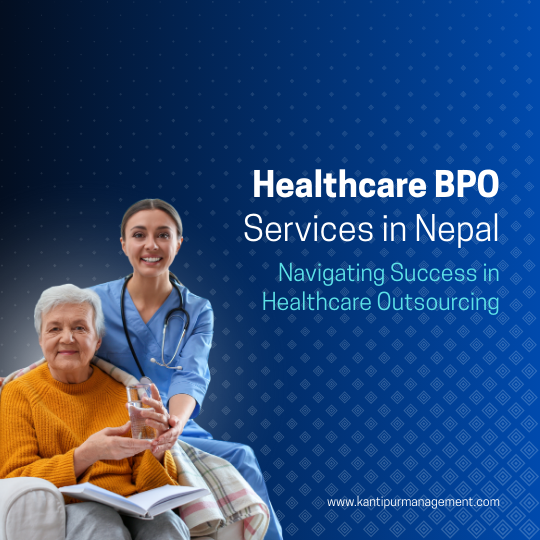
One of the world’s most information-intensive and dependent on processes businesses is the healthcare sector. Healthcare BPO Services providers handle a wide range of administrative tasks that frequently call for specialized knowledge and modern equipment, from patient records and invoicing to claims processing and telemedicine support.
Due to rising investment in digital health solutions and rising demand for outsourcing services, Nepal’s healthcare system is changing quickly. Nepal is a prospective location for healthcare business process outsourcing (BPO) due to the country’s recent significant expansion in its IT and service sectors.
Hospitals, clinics, insurance companies, and telemedicine platforms can assign non-core administrative tasks to outside experts with the help of healthcare BPO services in Nepal. Healthcare firms can concentrate on providing high-quality patient care, cost-effectiveness, and operational efficiency by streamlining back-office operations.
To know more about healthcare BPO services in Nepal and how you can navigate success in healthcare outsourcing, be sure to read till the end of this article!
Also Read: Outsource IT and Software Development Team to Nepal
What is Healthcare BPO Services?
The method of outsourcing particular administrative, operational, and technological responsibilities to outside service providers is known as healthcare business process outsourcing, or BPO. These jobs tend to be non-clinical in nature, which means they support the efficient administration of healthcare facilities rather than providing direct medical care.
Healthcare BPO services provider basically take over administrative duties, including medical billing, coding, claims processing, data entry, documentation, and patient communication, acting as strategic partners.
Healthcare organizations are able to focus their internal resources on essential tasks like patient care, medical research, and regulatory compliance thanks to this structure, which frees them from the burden of regular administrative tasks.
How Does BPO Help Manage Healthcare Processes?
Internal issues that healthcare firms frequently deal with include excessive administrative expenses, ineffective workflows, frequent regulatory revisions, and workforce shortages. Healthcare BPO services assist by:
- Lowering internal teams’ workloads: Staff members can concentrate on providing clinical care by automating and outsourcing processes like billing and claims processing.
- Increasing operational accuracy: Skilled BPO professionals employ established procedures to cut down on billing and documentation errors.
- Improving turnaround times: Large volumes of work can be handled swiftly and effectively by outsourced suppliers, frequently around-the-clock.
- Reducing personnel and infrastructure costs: By outsourcing to specialist suppliers, healthcare businesses can save money on hiring, training, software, and office space.
Healthcare professionals can increase productivity, reduce unnecessary costs, and improve patient satisfaction by streamlining these procedures.
You May Also Be Interested In: Outsource Healthcare Support Services to Nepal
What Are Healthcare BPO Services?
Clinical and non-clinical healthcare BPO services can be broadly classified as follows:
Healthcare BPO Services for Clinical
- Converting medical operations into standard codes for insurance billing is known as medical billing and coding.
- Managing patient scheduling, follow-ups, and remote administrative help through telehealth support and virtual care coordination.
- Medical transcription is the process of accurately writing down a doctor’s audio recordings.
- Processing and organizing sizable datasets from electronic health records (EHRs) is known as clinical data management.
Non-Clinical Healthcare BPO Services
- Complete financial services, such as filing claims, following up, and posting payments, are provided by Revenue Cycle Management (RCM).
- Customer service and patient support, including call center operations for making appointments, answering questions, and following up with patients.
- Payroll processing, training records, and personnel management are all part of human resources.
- EHR administration, data security procedures, and compliance audits are examples of IT and data management services.
Medical transcription, coding, claims processing, and telemedicine support are already provided by numerous outsourcing companies in Nepal. These services save money and improve back-office operations for foreign healthcare providers.
What Are the Different Types of Healthcare BPO Services?
A wide variety of medical and supportive tasks that guarantee patient well-being are included in healthcare services. Among the main healthcare services are:
- Primary care providers are specialists and general practitioners who treat and consult patients.
- Preventive care includes screenings, vaccinations, and regular checkups, as well as other services aimed at preventing disease.
- Hospital services include critical care, inpatient care, emergency treatment, and surgery.
- Diagnostic services include pathology, imaging, and laboratory testing.
- Pharmaceutical services include pharmacists’ prescriptions, dispensing, and advising of medications.
- Mental health services include psychiatric care, counseling, and therapy.
- Rehabilitative services include occupational therapy, speech therapy, and physical therapy.
Together, these various services aid a patient’s path from diagnosis to healing.
Also Read: Talent acquisition services: Your blueprint for hiring success
Benefits of Outsourcing in Healthcare
There are many benefits to outsourcing healthcare procedures.
Economy of Cost
By removing the requirement for internal personnel, infrastructure, and technology, outsourcing dramatically reduces operational costs. Nepal’s aggressive pricing strategy enables foreign customers to save a significant amount of money without sacrificing quality.
Availability of Skilled Talent
Every year, Nepal generates thousands of graduates in the disciplines of commerce, IT, and health sciences. Many are proficient in English and have received training in global standards such as ICD-10 and CPT coding, which enables them to precisely manage international healthcare procedures.
Expandability
Without the long-term commitment of recruiting new employees, healthcare providers can modify resource allocation based on demand, seasonality, or peak periods.
Increased Attention to Core Tasks
Healthcare teams can emphasize patient care and service improvement by outsourcing non-core tasks.
Enhanced Productivity
In order to improve workflow productivity, outsourcing partners frequently employ sophisticated software and automation solutions. Research indicates that companies that outsource back-office tasks frequently see shorter turnaround times and fewer processing errors.
Increased Contentment with Patients
Patient satisfaction and confidence are raised by quicker claims processing, more precise invoicing, and attentive patient care.
Healthcare Processes You Can Outsource
The following are a few of the most typical BPO jobs in healthcare:
These services provide operational enhancements and flexibility, particularly for businesses that are growing quickly or managing large transaction volumes.
Challenges in Healthcare BPO Services
Healthcare BPO Services in Nepal has many advantages, but there are drawbacks as well. Some of them are as follows:
Regulatory Compliance and Data Security
Data privacy is of utmost importance to healthcare organizations since they deal with extremely sensitive patient information. Global healthcare outsourcing partners cannot compromise on compliance with international laws like the General Data Protection Regulation (GDPR) and the Health Insurance Portability and Accountability Act (HIPAA).
Solution: Healthcare BPO companies should put in place sophisticated security frameworks, such as safe access controls, end-to-end data encryption, and frequent internal and external security audits. Building credibility and confidence with overseas clients is facilitated by obtaining internationally recognized compliance certifications and upholding stringent data governance practices.
Infrastructure and Connectivity Constraints
For healthcare activities to continue, dependable infrastructure is necessary. Power outages or erratic internet access can affect service delivery schedules, interfere with workflows, and erode customer trust.
Solution: BPO firms need to make investments in robust infrastructure, including cloud-based platforms, backup power systems, high-speed redundant internet connections, and disaster recovery plans. Even in the event of unanticipated outages, these precautions guarantee sustained service quality and business continuity.
Requirement for Specialized Medical Knowledge
Particularly in markets like the US, healthcare outsourcing necessitates a thorough awareness of complex medical laws, payer requirements, and changing compliance standards. Service accuracy and quality may deteriorate in the absence of ongoing upskilling.
Solution: Workforce development strategies should incorporate industry credentials, ongoing training programs, and regulatory updates. Teams may keep on top of evolving insurance regulations, coding standards, and healthcare policies by regularly updating their knowledge.
Interaction and Cultural Harmony
Working with international healthcare clients can occasionally result in misunderstandings or service gaps due to differences in communication methods, work cultures, and linguistic nuances.
Solution: Alignment with client expectations is ensured by investing in training in cultural sensitivity, communication skills development, and quality monitoring procedures. Maintaining service consistency and customer happiness is facilitated by regular feedback loops, performance reviews, and open communication.
Healthcare BPO companies in Nepal can improve operational resilience, establish enduring client confidence, and reliably provide top-notch healthcare support services in a cutthroat global outsourced market by proactively addressing these issues.
Best Practices for Implementing BPO Successfully in Healthcare
To guarantee the success of healthcare outsourcing, the following best practices should be considered:
- Select a Partner with Domain Knowledge: Seek out BPO providers who have demonstrated expertise in international compliance requirements and healthcare procedures.
- Establish Explicit Service Level Agreements (SLAs): It is important to have precise documentation of turnaround time, error rates, confidentiality, and performance indicators.
- Assure Smooth Integration: Make plans for common platforms, appropriate data migration, and compatibility with current systems.
- Stress Data Security: Role-based access control, encryption, and routine audits ought to be required.
- Ongoing Education and Training: Regularly train agents on new technologies, patient interaction strategies, and regulatory updates.
These procedures aid in achieving quantifiable results, lowering risks, and aligning expectations.
Future Outlook of Healthcare BPO Services
Forecasts indicate that the global healthcare BPO industry will continue to develop steadily over the next ten years. By 2033, for example, the worldwide healthcare BPO industry is expected to grow to USD 60.5 billion.
The following are important trends influencing the future:
- AI and Automation Integration: Automation technologies, including RPA and AI, are gaining popularity since they lessen manual labor and increase data processing, billing, and claims accuracy.
- Telehealth Expansion: Outsourcing support services for virtual care continues to be a high-growth field as telemedicine usage develops.
- Emphasis on Data Protection: Stronger cybersecurity protocols and compliance frameworks will be crucial as digitization increases.
- Outcome-Based Outsourcing Models: Moving toward contracts that are related to performance and reward better metrics.
- Blockchain for Secure Data Exchange: This technology is showing promise as a way to share patient records securely and ensure transaction transparency.
Choosing the Best BPO Company for Your Healthcare Business
One of the most important choices for healthcare firms is choosing the best BPO partner. Take into account the following elements:
- Industry Expertise: Seek out proven outcomes and experience in healthcare outsourcing.
- Regulatory Compliance: Verify that the partner complies with international data protection laws.
- Technology Capabilities: Vendors should make use of analytics, automation, and sophisticated technologies.
- Flexibility and Scalability: The capacity to scale services in response to demand.
- Communication and Transparency: Performance reporting, cooperative planning, and frequent updates.
Conclusion
Healthcare BPO services are strategic drivers that assist healthcare providers in streamlining processes, increasing efficiency, and concentrating more on providing high-quality patient care. They are more than simply cost-saving solutions.
The growth of healthcare BPO services Nepal offer a great chance to access international markets, make use of its highly qualified labor force, and establish itself as a new center in the healthcare outsourcing industry. In the coming years, Nepal can establish itself as a reliable location for healthcare outsourcing services with the correct alliances, robust data practices, and technological investment.